A crack in your foundation is one of the most common concerns homeowners across the Greater Toronto Area bring to us, and also one of the most misunderstood. Some cracks are cosmetic and harmless. Others are early signs of a problem that will get worse and more expensive if left alone.
This guide explains what foundation crack repair actually involves, how to read the crack you are looking at, and what affects the cost and outcome. The goal is to help you tell the difference between a crack you can monitor and one that needs a professional assessment soon.
What Foundation Crack Repair Is
Foundation crack repair is the process of sealing, stabilising, or structurally reinforcing a crack in a home’s foundation wall or footing. The right method depends entirely on the type of crack, what caused it, and whether water is getting through.
In the GTA, most homes have poured concrete or concrete block foundations, with older properties often built on brick or stone. Each material cracks differently and calls for a different approach. A hairline crack in poured concrete is not treated the same way as a stepped crack running through a block wall.
Repair is not always about filling the visible gap. In many cases the crack is a symptom, and a lasting fix means addressing the cause, whether that is water pressure against the wall, poor drainage, or movement in the soil beneath the footing.
What Causes Foundation Cracks in the GTA
Toronto and the surrounding region put specific pressures on foundations. Understanding the cause helps explain why a crack appeared and whether it is likely to keep moving.
Freeze and Thaw Cycles
Our winters swing repeatedly between freezing and thawing. Water in the soil expands as it freezes and pushes against foundation walls. Over many seasons this pressure works open small cracks and widens existing ones.
Clay Soil Movement
Much of the GTA sits on clay-heavy soil. Clay swells when wet and shrinks when dry, which means the ground under and around a foundation is constantly shifting through the seasons. That movement transfers directly into the concrete.
Hydrostatic Pressure
When water collects in the soil around a foundation and has nowhere to drain, it builds pressure against the wall. This is one of the leading reasons cracks begin to leak, and it is closely tied to grading and drainage around the home.
Concrete Curing and Settlement
New concrete shrinks slightly as it cures, which produces fine hairline cracks that are usually harmless. Separately, a house settles into its soil over its first years, and uneven settlement can produce larger, more meaningful cracks.
Types of Foundation Cracks and What They Mean
The direction and shape of a crack tell you more than its length. Reading the crack correctly is the first step in knowing how urgent the repair is.
Hairline Cracks
These are thin, shallow cracks, often less than the width of a coin’s edge, and most common in newer poured foundations as the concrete cures. They are usually cosmetic. They still deserve attention if they begin to widen or let in moisture, but on their own they rarely signal a structural problem.
Vertical Cracks
Vertical cracks run straight up and down or lean slightly off vertical. They are the most common type in poured concrete and are frequently caused by curing and minor settlement. Many are not structural, but a vertical crack that leaks water is a clear candidate for sealing before it worsens.
Diagonal Cracks
Diagonal cracks angle across the wall, typically at 30 to 45 degrees, and often point to differential settlement, where one part of the foundation has moved more than another. These warrant a closer look, especially if the crack is wider at one end than the other.
Horizontal Cracks
Horizontal cracks are the most serious type. They usually indicate that soil or water pressure is pushing against the wall from outside. A horizontal crack, particularly one with any inward bowing of the wall, should be assessed by a professional promptly rather than monitored.
Stair-Step Cracks
Common in brick and concrete block foundations, stair-step cracks follow the mortar joints in a staircase pattern. They point to settlement or lateral pressure. A tight, stable stair-step crack may be minor, but a widening one signals ongoing movement that needs evaluation.
Which Cracks Are Urgent and Which Can Wait
Not every crack is an emergency, but a few signs move a crack from “monitor it” to “get it looked at soon.”
- The crack is wider than roughly 3 millimetres, about the thickness of a nickel.
- It is horizontal, or the wall shows any inward bowing.
- It is actively leaking water or leaving mineral staining behind.
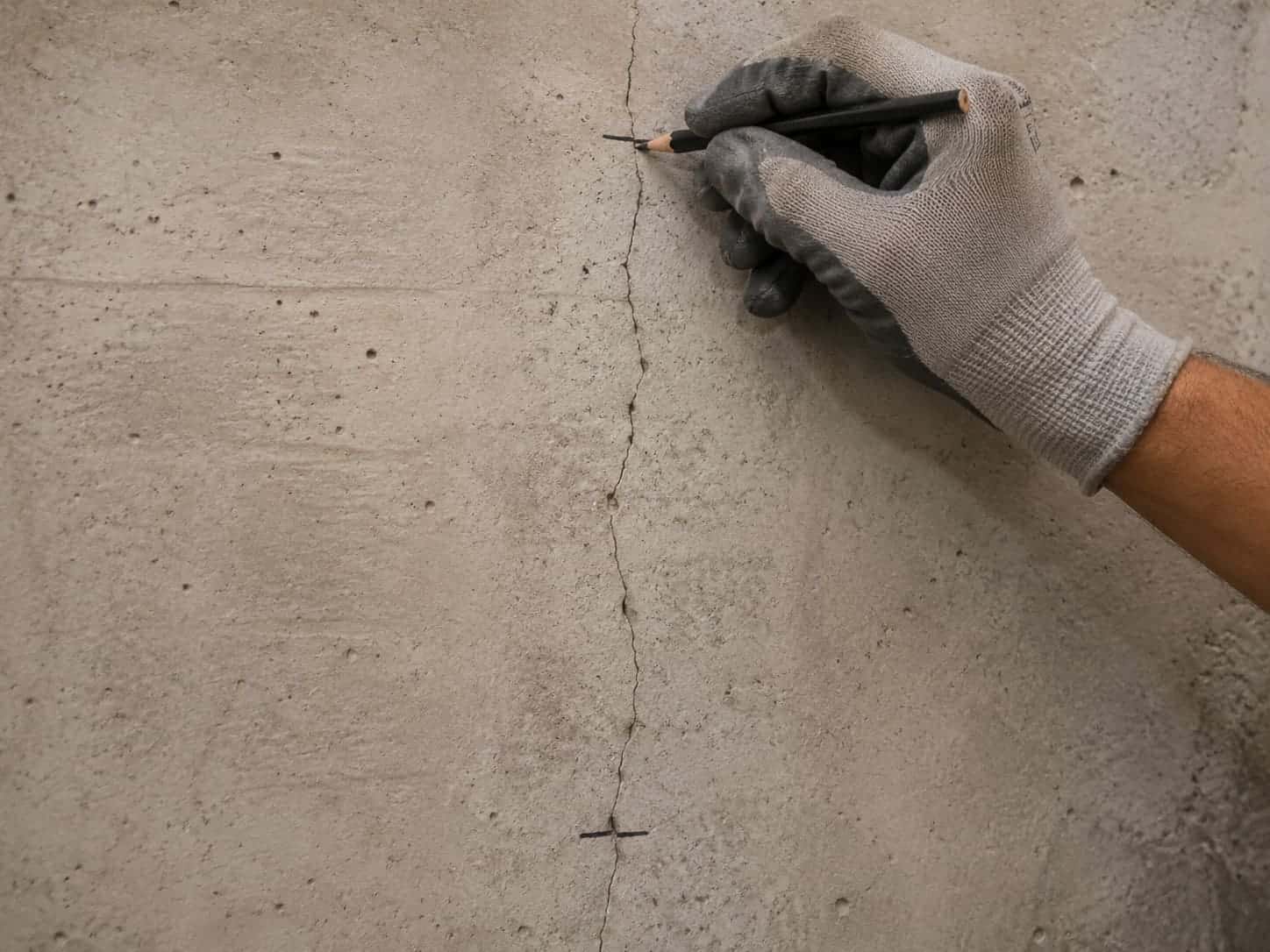
- It is growing over weeks or months, which you can confirm by marking the ends and dating them.
- Doors or windows nearby have started sticking, or floors have begun to slope.
If none of these apply and the crack is a thin, dry, stable hairline, it is reasonable to keep an eye on it. When in doubt, a professional assessment costs far less than the repair that follows years of ignored movement. Our foundation repair team can tell you quickly whether what you are seeing is cosmetic or structural.
How Foundation Cracks Are Repaired
There is no single fix. The method is chosen to match the crack type, the foundation material, and whether water is involved.
Epoxy and Polyurethane Injection
For non-structural cracks in poured concrete, injection is the standard approach. Epoxy is used where the crack still needs structural bonding, while flexible polyurethane is used where sealing against water is the priority. The material is injected under pressure so it fills the full depth of the crack rather than just the surface.
Exterior Excavation and Waterproofing
When a crack is leaking or the cause is outside pressure, the most durable fix is to excavate down to the footing on the outside, seal the crack, and apply a waterproof membrane. This addresses the water at its source rather than treating the symptom inside. It pairs naturally with exterior waterproofing of the affected wall section.
Carbon Fibre and Structural Reinforcement
Where a wall is bowing or a crack is structural, reinforcement is used to stop further movement. Carbon fibre straps, steel bracing, or wall anchors hold the wall and prevent the crack from opening further. This is a repair that should always follow a proper structural assessment.
Repointing and Rebuilding for Brick and Block
For stair-step cracks in brick or block, the fix often involves raking out and replacing the failed mortar, and in more advanced cases rebuilding a section of the wall. Matching the mortar and workmanship to the original is what makes the repair last and look right.
What Affects the Cost of Foundation Crack Repair
Homeowners understandably want a number, but foundation crack repair covers everything from a quick injection to a full excavation. The main factors that move the price are worth understanding before you get a quote.
- Repair method. An interior injection is at the lower end. Exterior excavation and waterproofing is substantially more because of the digging, membrane, and restoration involved.
- Crack severity and cause. A single stable crack is straightforward. A wall that is moving and needs reinforcement is a larger job.
- Access and depth. A deep foundation, landscaping, decks, or walkways over the work area all add labour.
- Foundation material. Poured concrete, block, and brick each call for different methods and materials.
- Number of cracks. Addressing several at once is usually more efficient per crack than returning for each one separately.
Because the range is so wide, an on-site look is the only way to give an honest figure. A professional should be able to explain not just the price but why a given method is right for your specific crack.
Common Mistakes Homeowners Make
A few recurring mistakes turn a manageable problem into an expensive one.
- Filling cracks with caulk or hydraulic cement from the hardware store. This hides the crack without addressing depth or cause, and the problem returns, often worse.
- Treating the symptom, not the source. Sealing a leaking crack from the inside while ignoring the drainage pushing water against the wall rarely lasts.
- Waiting too long on a moving crack. A crack that could have been injected can become a wall that needs reinforcement if movement continues for years.
- Ignoring grading and gutters. Water directed toward the foundation is behind a large share of the cracks we see. Fixing the crack without fixing the water is half a repair.
Getting these right early is far cheaper than correcting them later. For homeowners across the city, our Toronto masonry contractors can assess the crack and the conditions around it in a single visit.
Frequently Asked Questions About Foundation Crack Repair
Are all foundation cracks a serious problem?
No, many foundation cracks are cosmetic and not a structural threat. Thin, stable hairline cracks in poured concrete are common as the material cures and often need nothing more than monitoring. The cracks that matter are horizontal ones, cracks wider than about 3 millimetres, cracks that leak, and cracks that grow over time. The direction, width, and behaviour of the crack tell you far more than its length, which is why a professional look is worthwhile when you are unsure.
How do I know if a foundation crack is leaking?
You will usually see water, dampness, or mineral staining around the crack after heavy rain or snowmelt. A leaking crack often leaves a chalky white residue called efflorescence as water carries minerals out of the concrete. You may also notice a musty smell or dampness on the interior wall or floor nearby. Even a small leak matters, because water moving through a crack tends to widen it over time and can lead to further moisture problems inside the home.
Can foundation crack repair be done in winter?
Yes, interior repairs such as crack injection can be carried out year-round because they are done from inside the basement. Exterior excavation work is more weather-dependent, since frozen ground and snow make digging harder and can affect how certain materials cure. In the GTA, many homeowners handle interior injection through winter and schedule any exterior waterproofing for milder conditions. A contractor can advise on the right timing based on your specific crack and the fix it needs.
How long does a foundation crack repair last?
A properly executed repair that addresses the cause should last for many years, often the life of the home. The key word is properly. An injection that fills the full depth of a stable crack, or an exterior membrane that keeps water away from the wall, is a durable fix. Repairs fail when they seal the surface without addressing depth, or when they treat the crack while ignoring the drainage or movement that caused it. This is why diagnosis matters as much as the repair itself.
Should I repair a foundation crack from the inside or the outside?
It depends on the crack and its cause. Interior injection is faster, less invasive, and well suited to non-structural cracks and many leaks. Exterior excavation and waterproofing is more involved but addresses water pressure at its source and is the more durable option for persistent leaks or when the surrounding drainage is the real problem. A professional assessment will weigh the crack type, the water conditions, and access around your home to recommend the approach that will actually hold.
Who should I call for foundation crack repair in Toronto?
Look for an experienced masonry or foundation contractor who assesses the cause before quoting a fix. GTA Masonry is a family-run team with more than 25 years of experience, WSIB certified and insured, serving Toronto and the surrounding region. A good contractor will explain what type of crack you have, whether it is structural, and why the recommended method suits it, rather than defaulting to a one-size-fits-all repair. If you are unsure about a crack, an on-site assessment is the sensible first step.