Markham’s housing stock covers a wide range of eras and construction types, from mid-century brick bungalows in Unionville to large detached homes built through the 1990s and 2000s in Greensborough, Cornell, and Cathedraltown. Each era brings its own masonry characteristics and its own common failure patterns. Understanding what your home is likely dealing with makes it easier to identify problems early and act on them before they become expensive.
This guide covers the masonry issues that come up most often in Markham, what causes them, and what homeowners should know before calling a contractor.
Markham’s Housing Eras and What They Mean for Masonry
The age and construction method of a home shapes the kind of masonry maintenance it requires. Markham’s residential development spans several distinct periods, and each one has patterns worth knowing.
Pre-1980 Homes in Unionville and Thornhill Border Areas
Older homes in Markham, particularly in the historic Unionville village area and the neighbourhoods that border Thornhill, were typically built with solid brick or brick veneer over concrete block. These homes are now 40 to 80 years old. The mortar joints on this era of construction are well past their typical service life of 25 to 30 years and are commonly showing the effects of decades of freeze-thaw cycling. Repointing is the most frequent masonry need on homes of this age, followed by spalling brick repair on walls with persistent moisture exposure.
1980s to Early 2000s Brick Veneer Construction
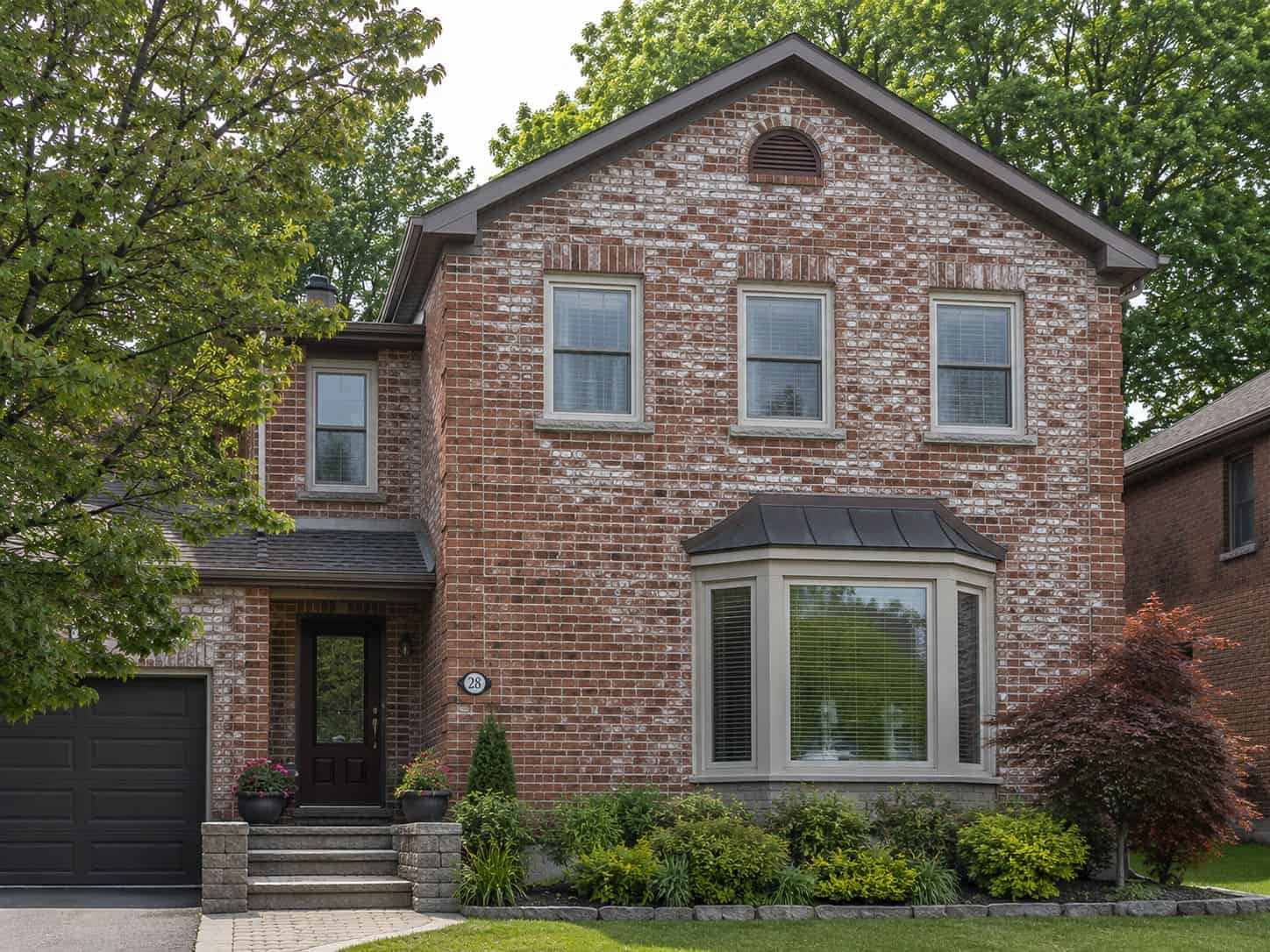
A large portion of Markham’s residential inventory was built during the development boom of the 1980s and 1990s. The standard construction method during this period was brick veneer over wood-frame, which is a single wythe of brick attached to a wood stud wall with metal ties. This construction type requires careful attention to weep holes at the base of the brick veneer, which allow moisture that enters the cavity behind the brick to drain out rather than accumulate. Blocked or missing weep holes are a recurring problem on homes of this era and can cause interior wall moisture and accelerated mortar failure. Brick repair and tuckpointing are the most common needs.
Newer Construction in Cornell, Cathedraltown, and Greensborough
Homes built from the early 2000s onward in Markham’s newer communities were constructed under more recent building codes with better moisture management details. They are generally in better shape from a structural standpoint. The masonry issues that appear on newer homes are more often cosmetic: minor efflorescence, small cracks at corners and openings, and early mortar joint wear in areas with high water exposure. These are maintenance items that are inexpensive to address early but progress if ignored.
Common Masonry Problems in Markham Homes
Mortar Joint Failure
Failing mortar joints are the most common masonry maintenance item across Markham’s housing stock, regardless of era. Mortar breaks down over time as a natural result of weather cycling. In Markham, as across the GTA, the freeze-thaw pattern of the shoulder seasons is the primary driver. When joints open up, water enters the wall, and deterioration of both the mortar and the brick behind it accelerates.
The repair is tuckpointing: grinding out the failed mortar to a consistent depth, cleaning the joint, and packing in fresh mortar matched to the original. On older Markham homes, getting the mortar composition right is important. A mix that is too hard for the original soft brick will transfer stress into the brick face and cause spalling. A mason familiar with older regional construction knows this and accounts for it.
Spalling Brick
Spalling is common on Markham homes where mortar maintenance has been deferred. Once joints open and moisture penetrates the brick, Toronto’s freeze-thaw cycle does the rest. The face of the brick fractures and flakes away. Left alone, spalling spreads to adjacent brick as the water entry point grows.
Individual spalled bricks can be replaced when the problem is isolated. When spalling is distributed across a section, a more comprehensive repair that addresses both the brick and the surrounding mortar is the more durable approach. Our brick repair and restoration work covers both scopes.
Foundation Parging Failure
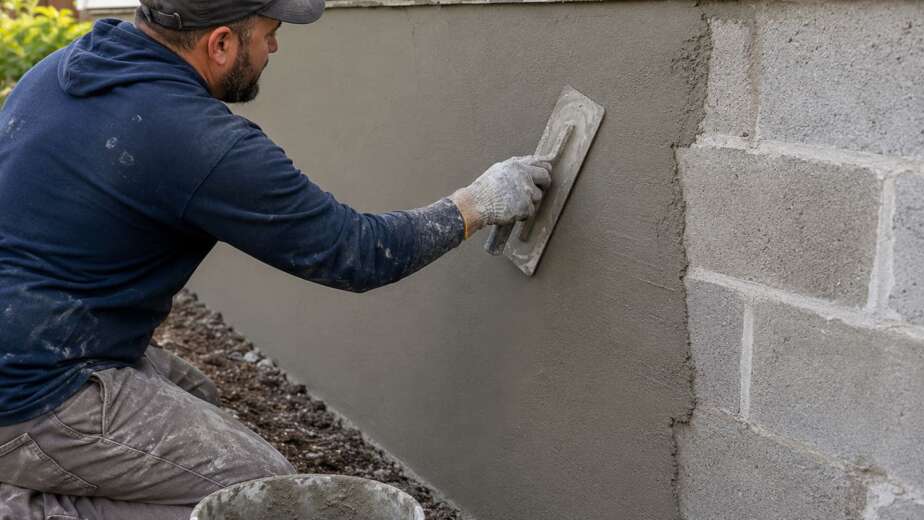
Foundation parging on older Markham homes is commonly near or past end of life. The concrete block foundations typical of mid-century construction were originally parged as part of construction, and that original coating has been weathering for 40 to 70 years. Where it has cracked, peeled, or fallen away, the block beneath is exposed to direct moisture and accelerated deterioration.
Our parging services cover full removal and recoating of failed parging, with substrate assessment to determine whether any block repair is needed before the new coat is applied. Applying new parging over an unassessed substrate is a common shortcut that produces short-lived results.
Chimney Deterioration
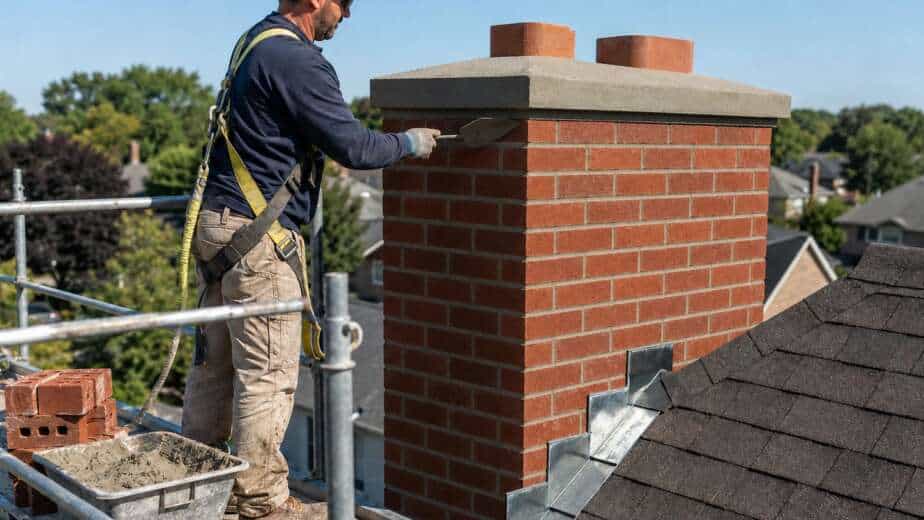
Chimneys on older Markham homes have typically been in service for 50 years or more. Mortar joint failure, cracked or missing chimney crowns, and spalling brick on the upper courses are all common findings on chimneys of this age. Because a chimney is exposed on all four sides and receives no protection from roof overhangs, it weathers faster than other exterior masonry on the same house.
A chimney with failing mortar or a cracked crown should be assessed before the heating season. Water entering through a deteriorated crown can damage the firebox and the interior masonry, adding to the repair scope and cost. Our chimney repair service covers everything from targeted repointing to partial and full rebuilds above the roofline.
Efflorescence
White staining on brick and mortar surfaces is a common sight on Markham homes, particularly on north-facing walls and foundation sections. Efflorescence is caused by soluble salts migrating through the masonry and crystallising on the surface as moisture evaporates. It is not structurally dangerous on its own, but it is a visible signal that moisture is moving through the masonry. Persistent efflorescence in the same location, particularly at lower courses or at the base of the foundation, is worth investigating to determine the moisture source.
Markham’s Climate and What It Does to Exterior Masonry
Markham sits inland from Lake Ontario, which means it does not benefit from the lake’s moderating effect in the way that Toronto’s waterfront neighbourhoods do. Winters are colder, the frost season is longer, and the number of freeze-thaw cycles through March and April is higher than in more southern parts of the GTA.
For masonry, this matters. Each freeze-thaw cycle works on any existing crack or open mortar joint, expanding it slightly as water inside freezes and then contracting as it thaws. Over a winter with 35 to 45 cycles, the cumulative effect on marginal mortar joints is significant. It is why masonry that is borderline in autumn often shows clear deterioration by spring, and why addressing failing joints before winter rather than after produces consistently better outcomes.
When to Address Masonry Repairs in Markham
The optimal window for most masonry repair work is late spring through early fall, when temperatures are reliably above the threshold for mortar to cure properly and curing conditions are stable. In Markham, the practical working season runs from late April through October in most years.
That said, if you notice active symptoms in late summer or early fall, scheduling a repair before winter is worth prioritising. A chimney with a failed crown, open mortar joints on a north-facing wall, or foundation parging that has separated from the block will all worsen through the winter cycle. The cost of a fall repair is almost always less than the cost of the expanded damage that results from one more winter of water entry.
If you are planning work for the following season, booking an assessment in late winter allows you to understand the scope before the spring rush and to schedule early in the season rather than waiting for summer availability.
Choosing a Masonry Contractor in Markham
Masonry work is a trade that rewards experience. The technical details that determine whether a repair lasts 5 years or 25 years, including mortar composition, joint preparation depth, brick matching, and curing conditions, are not visible in the finished product from the street. You are largely relying on the contractor’s knowledge and practices rather than what you can inspect after the fact.
Practical things to look for when hiring a masonry contractor in Markham:
- A clear explanation of what preparation is included before any new material is applied
- A specific answer about the mortar type being used and why it is appropriate for your wall
- Warranty coverage on labour, not just materials
- WSIB coverage and proof of insurance, which protects you if anything goes wrong on site
- References or project examples from homes of a similar era and construction type to yours
GTA Masonry has been serving Markham and the broader GTA for over 25 years. We are WSIB certified, fully insured, and back our work with a 10-year labour warranty. Our team works with the full range of residential masonry from Unionville’s heritage-era homes through to newer construction in Markham’s more recent communities. You can reach us through our GTA masonry services page or request a quote directly to arrange a site assessment.
Frequently Asked Questions About Masonry Repair in Markham
How do I know if my brick mortar needs repointing?
The clearest signs are mortar that crumbles when you press it with a key or tool, joints that are visibly recessed compared to the brick face, and white staining or efflorescence on the brick surface near the joints. If your home is more than 25 to 30 years old and the mortar has never been repointed, a visual inspection is a reasonable precaution regardless of whether symptoms are obvious. Mortar has a service life, and addressing it at the early stage of failure is far less costly than waiting until bricks begin to spall.
Is brick veneer on a Markham home as durable as solid brick?
Brick veneer is a single layer of brick, typically 90mm thick, attached to a wood or steel frame wall. It is not structural in the way that solid brick is, but it performs well as a cladding material when the wall is properly detailed and maintained. The critical maintenance point on brick veneer is keeping the mortar joints sound and ensuring weep holes at the base of the veneer remain clear. Blocked weep holes trap moisture in the cavity behind the brick, which causes mortar failure and can allow moisture to reach the wood framing behind.
What causes white staining on brick walls in Markham?
White staining is efflorescence: soluble salts that are present in the masonry or mortar being carried to the surface by moisture and crystallising as the moisture evaporates. It is more visible in spring, when seasonal moisture movement through the wall is highest. Surface efflorescence can be cleaned with a dilute acid wash or masonry cleaner. Persistent or recurring efflorescence in the same location signals ongoing moisture movement that is worth investigating, as it indicates water is consistently finding a path through the masonry at that point.
How much does masonry repair cost in Markham?
Cost depends on the type and extent of the work. Targeted repointing on a section of wall runs $400 to $1,500 for most jobs. Spalling brick repair ranges from $500 for a small patch to $3,000 or more for widespread replacement. Foundation parging on a full perimeter typically costs $2,000 to $4,500 for a detached home. Chimney repair ranges from a few hundred dollars for a crown repair to $3,000 to $5,000 for an above-roofline rebuild. An accurate quote requires a site visit, as substrate condition and access both affect the final number.
Can masonry repairs be done in winter in Markham?
Most masonry repair work, including mortar repointing and parging, requires temperatures above 5 degrees Celsius with no freezing temperatures forecast within 48 hours of application. In Markham, that typically means work is not practical from November through March in most years. Emergency structural repairs can be done with cold-weather precautions including heated enclosures, but this adds cost and complexity. For planned work, the spring through fall window produces the most reliable results and the best value.
How long does brick repair last on a Markham home?
A properly executed brick repair using compatible mortar and correctly sourced replacement brick should last 20 to 30 years before requiring further attention. The variables that most affect longevity are the mortar mix, the thoroughness of the joint preparation, and whether the underlying cause of the damage was addressed as part of the repair. A repair that fixes the visible damage without resolving the moisture entry point that caused it will fail sooner than one that addresses both.