A flagstone patio is one of the most enduring ways to turn a backyard into usable outdoor living space. The natural stone weathers beautifully, suits both traditional and modern homes, and, installed correctly, lasts for decades with little upkeep.
This guide walks GTA homeowners through what flagstone is, how a patio is built properly, what affects the cost and timeline, and the mistakes that shorten a patio’s life. Whether you are comparing quotes or just starting to plan, it will help you know what a good installation looks like.
What Flagstone Is
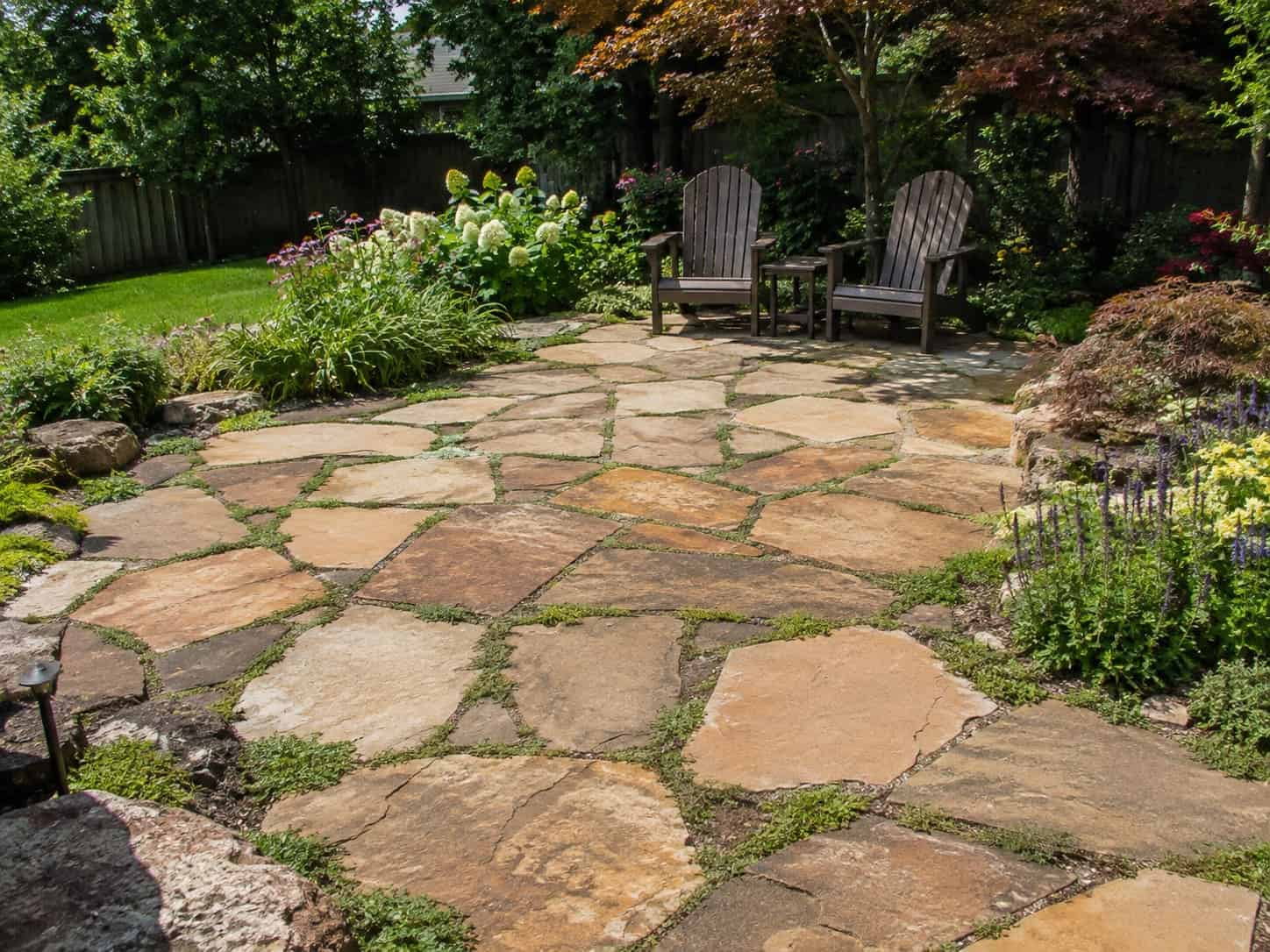
Flagstone is a broad term for flat, naturally split sedimentary stone used for paving. Rather than being cast or moulded, it is quarried and split along its natural layers, which gives each piece its distinctive irregular shape, texture, and colour variation.
Common types used across Ontario include sandstone, limestone, and quartzite, each with its own palette and character. Because it is a natural material, no two flagstone patios look exactly alike, which is a large part of the appeal. The stone’s density and finish also affect how it handles our freeze and thaw cycles, which matters for longevity in the GTA.
Why Homeowners Choose a Flagstone Patio
Flagstone competes with concrete, poured slabs, and manufactured pavers. It earns its place for a few clear reasons.
- Natural appearance. The organic colour and texture blend into a landscape in a way manufactured products rarely match.
- Durability. Quality stone set on a proper base handles heavy use and decades of weather.
- Slip resistance. The naturally textured surface provides good footing, which is valued around pools and in wet weather.
- Longevity and value. A well-built stone patio is a lasting feature that adds to a property rather than something to replace in a few years.
- Design flexibility. Irregular flagstone gives a relaxed, organic look, while cut flagstone offers cleaner, more formal lines.
As a natural product, flagstone sits within the broader family of natural stone options, so it pairs naturally with stone steps, walls, and borders for a cohesive yard.
Flagstone Patio Design Options
Before installation, the two design decisions that shape the finished look are the stone format and the joint treatment.
Irregular Versus Cut Flagstone
Irregular flagstone uses pieces in their natural, random shapes, fitted together like a puzzle for an organic, informal feel. Cut flagstone is trimmed into rectangles and squares for a structured, contemporary layout. Irregular tends to suit cottage and garden settings, while cut stone complements modern architecture.
Jointing and Layout
The gaps between stones can be filled with polymeric sand, mortar, or planted with ground cover for a softer look. Tight joints read as formal and clean, while wider planted joints feel natural and relaxed. The choice affects both appearance and maintenance, since mortared joints resist weeds but need occasional repair, and sanded joints are easier to top up.
Integrating the Patio Into the Yard
A patio works best when it is designed as part of the whole yard rather than a standalone slab. Considering sightlines, transitions to the lawn or garden, steps, seating areas, and borders at the planning stage produces a more usable and attractive result. This is where thoughtful landscape design makes the difference between a patio that feels placed and one that feels planned.
How a Flagstone Patio Is Installed
The finished stone is what people see, but the base beneath it determines whether the patio stays flat and stable through our seasons. A proper installation is mostly about what happens below the surface.
Excavation
The area is excavated to a depth that allows for a full base plus the stone. In the GTA, adequate depth matters because a shallow base heaves when the ground freezes. Getting this stage right is the foundation of a patio that does not shift.
Base Preparation
A compacted aggregate base, typically crushed gravel, is built up in layers and compacted at each stage. This base carries the load and, critically, allows water to drain away rather than pooling and freezing beneath the stone. The depth and quality of this layer is the single biggest factor in long-term stability.
Setting Bed
A levelling layer, commonly stone dust or a bedding sand, is laid over the compacted base. The flagstone is set into this bed, which lets each irregular piece be seated and levelled individually. Because natural stone varies in thickness, this stage takes patience and skill to keep the surface even.
Laying the Stone
The flagstone is arranged, fitted, and set for consistent spacing and a level surface, with attention to colour distribution across the whole patio. With irregular stone this is a genuine craft, as each piece has to be chosen and often trimmed to fit its neighbours.
Jointing and Finishing
Finally the joints are filled with the chosen material, whether polymeric sand, mortar, or planting, and the surface is cleaned and compacted or set. Proper jointing locks the stones together, keeps weeds down, and completes the finished appearance.
What Affects the Cost and Timeline
Flagstone patio pricing depends on scope and stone selection more than any single figure. Understanding the drivers helps you plan a realistic budget.
- Size of the patio. Larger areas use more stone and base material and take longer to lay.
- Stone type and thickness. Different flagstones vary in price, and thicker, denser stone typically costs more but wears better.
- Irregular versus cut. Fitting irregular stone is more labour-intensive than laying uniform cut pieces.
- Site conditions. Sloped yards, poor drainage, difficult access, and removal of existing surfaces all add work.
- Base requirements. Soft or clay-heavy soil may need a deeper base for stability, which affects both cost and time.
- Jointing method. Mortared joints and intricate patterns add labour compared with sanded joints.
Timeline follows the same logic. A modest patio on good ground goes quickly, while a large patio on difficult soil with extensive base work takes longer. An on-site assessment is the only way to give an accurate figure and schedule for your yard.
Common Flagstone Patio Mistakes
Most patios that fail early do so for the same avoidable reasons, and nearly all of them trace back to the base.
- An inadequate base. Skimping on depth or compaction is the leading cause of stones that shift, sink, and heave. This is not the place to cut corners in a freeze-thaw climate.
- Poor drainage. Water trapped under the stone freezes and lifts the patio. Proper grading and a draining base prevent it.
- Uneven setting. Because flagstone varies in thickness, rushing the setting bed leaves lips and wobbles that become trip hazards.
- Wrong stone for the use. Thin or soft stone in a high-traffic area cracks over time. Matching stone to purpose matters.
- Neglecting joints. Unfilled or poorly filled joints let weeds in and allow stones to migrate.
Avoiding these comes down to preparation and craftsmanship. A patio built on a proper base by an experienced crew is what turns flagstone’s natural durability into a surface that lasts. Professional patio installation is largely about getting the unseen work right.
Frequently Asked Questions About Flagstone Patios
How long does a flagstone patio last?
A properly installed flagstone patio can last for decades, often thirty years or more, because natural stone is extremely durable. The lifespan depends far more on the installation than on the stone itself. A solid, well-drained, compacted base is what keeps the patio stable through the GTA’s freeze and thaw cycles. Patios that fail early almost always do so because of a weak base or poor drainage rather than because the stone wore out. With sound construction and minor upkeep, flagstone is one of the longest-lasting patio surfaces available.
Is a flagstone patio more expensive than concrete or pavers?
Flagstone often carries a higher upfront cost than poured concrete and can be comparable to or more than manufactured pavers, mainly because natural stone and the labour to fit it cost more. What that buys is a natural appearance, strong durability, and a feature that adds lasting value to the property. Many homeowners view it as a long-term investment rather than the cheapest option, since a well-built stone patio rarely needs replacing. The right comparison is total value over decades, not just the initial price.
Does a flagstone patio need a lot of maintenance?
Flagstone is fairly low-maintenance, but not maintenance-free. Routine care involves sweeping, occasional washing, keeping joints filled, and pulling any weeds that appear in sanded or planted joints. Depending on the stone and the finish, some homeowners choose to seal the surface periodically to guard against staining, though it is not always required. Compared with surfaces that crack or fade, a natural stone patio asks relatively little, and most upkeep is simple and seasonal rather than demanding.
Can a flagstone patio be installed on a slope?
Yes, flagstone patios can be built on sloped yards, though it takes more planning and often additional features. Depending on the grade, the design may incorporate steps, terracing, or a retaining wall to create level usable areas and manage water flow. Proper drainage becomes even more important on a slope so that runoff does not undermine the base. A sloped site is very workable with the right design, but it usually adds to both the scope and the cost compared with a flat yard.
What is the best time of year to install a flagstone patio in the GTA?
Spring through fall is the typical installation window in the GTA, since the work involves excavation and base preparation that are far easier in unfrozen ground. Late spring and summer are popular, though early fall can be ideal because conditions are dry and stable. Winter installation is generally impractical because frozen soil complicates excavation and compaction. Booking earlier in the season also helps, as reputable installers fill their schedules quickly once the weather turns.
Should I choose irregular or cut flagstone for my patio?
It comes down to the look you want and the style of your home. Irregular flagstone, with its natural random shapes, creates a relaxed, organic feel that suits gardens and traditional settings. Cut flagstone, trimmed into clean rectangles and squares, gives a structured, contemporary appearance that complements modern architecture. Irregular stone is more labour-intensive to fit, which can affect cost, while cut stone lays more uniformly. Considering both alongside your yard and home style, ideally with a designer’s input, helps you land on the right choice.