When a chimney is showing visible damage, the first question most homeowners ask is whether it can be repaired or needs to come down and be rebuilt. It is a reasonable question, and the answer makes a significant difference to both the cost and the scope of work involved. Repair and rebuild are not interchangeable options. They apply to different conditions, and choosing the wrong one either wastes money or leaves the underlying problem unresolved.
This guide explains what separates a chimney that can be repaired from one that needs a chimney rebuild, what signs point clearly in each direction, and how a mason actually makes that assessment on site. If you are trying to understand what you are looking at before calling anyone, this is a practical starting point.
Why the Distinction Matters
Repair work addresses specific, contained damage while preserving the existing chimney structure. Rebuilding involves taking down some or all of the chimney and reconstructing it from a defined point upward. Both are legitimate outcomes depending on conditions. The problem is when the wrong call is made.
A chimney that genuinely needs rebuilding but receives repeated patch repairs will continue to deteriorate. The patches buy time, but they do not fix structural failure, widespread mortar breakdown, or brick that has lost integrity through years of freeze-thaw damage. Eventually the cost of deferred rebuilding exceeds what an earlier rebuild would have cost.
On the other side, recommending a full rebuild on a chimney that has isolated, repairable damage is an unnecessary expense. A chimney in structurally sound condition with a failed crown, failing mortar on the upper courses, or a handful of spalled bricks is a repair job. It does not need to come down.
What Chimney Repair Covers
Repair is the right scope when the damage is specific, localized, and the chimney structure beneath and around it is sound. The following conditions are generally repairable without rebuilding.
Crown Damage
The chimney crown is the concrete or mortar cap that covers the top of the chimney structure. It directs water away from the flue and protects the uppermost brick courses. Crowns crack due to thermal movement and weather exposure. A cracked or crumbling crown that has allowed water into the flue is a serious issue, but it is a repair, not a rebuild. Crown replacement restores the protective function without touching the chimney masonry below.
Mortar Joint Failure
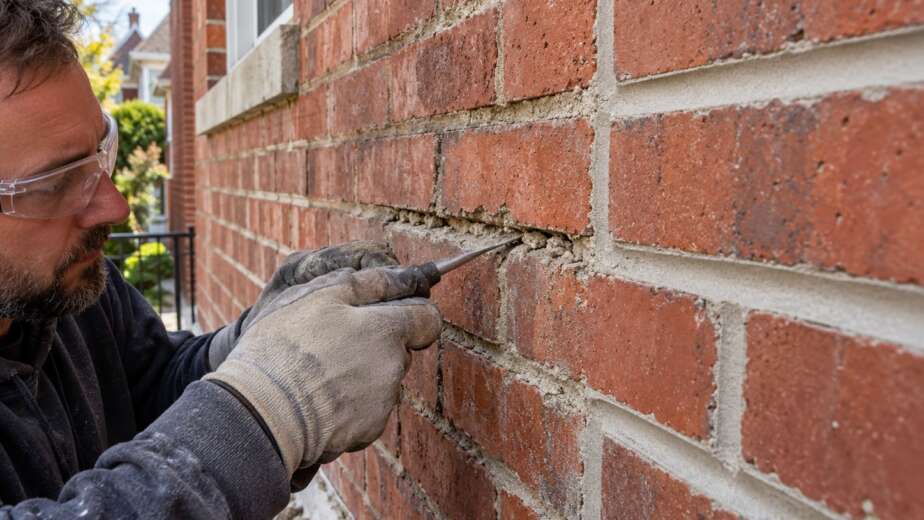
When mortar joints on the upper section of a chimney are crumbling, recessed, or open, mortar repointing is the appropriate response. The existing brick is sound; it is only the mortar that has failed. Repointing grinds out the damaged mortar, cleans the joint, and packs in fresh mortar matched to the hardness of the surrounding brick. This is one of the most common chimney repairs we perform and it restores the weather seal without structural intervention.
Limited Brick Replacement
A small number of spalled or cracked bricks on an otherwise intact chimney can be removed and replaced individually. The surrounding structure is stable, the mortar condition in unaffected areas is adequate, and the chimney is plumb. Individual brick replacement is repair work, and it is considerably less costly than a rebuild.
Cap and Flashing Repair
A missing or damaged chimney cap allows rain and animals into the flue. Failed flashing allows water to run between the chimney and the roof surface and into the building structure. Both are common problems and both are repairs, regardless of how much secondary damage they may have caused inside. Replacing a cap or re-flashing a chimney does not require the chimney to be rebuilt.
What Points Toward a Chimney Rebuild
Rebuilding becomes the more appropriate path when the damage is structural, widespread, or has progressed beyond what localized repair can reliably address. The following conditions are strong indicators that a rebuild is warranted.
The Chimney Is Leaning or Off-Plumb
A chimney that has shifted, leaned, or is visibly out of plumb has a structural problem. The foundation, the bond between courses, or the underlying support has been compromised. Patching brick or repointing mortar on a chimney that is no longer straight does not fix the movement. The chimney needs to come down to a stable point and be rebuilt from there. This is non-negotiable from a safety standpoint.
Widespread Brick Deterioration Through Multiple Courses
When spalling is not isolated to a few bricks but is present across multiple courses throughout the chimney height, the repair calculation changes. Replacing individual bricks scattered through a structurally compromised section produces an inconsistent result that will continue to fail. If more than roughly a third of the bricks in a section show active spalling or structural loss, rebuilding that section is typically more cost-effective and more durable than individual replacement.
Deep Mortar Failure Through the Full Height
There is a threshold beyond which repointing the existing structure is no longer the right tool. If mortar has failed deeply throughout the full height of the chimney, the bond between bricks has been compromised. The chimney may look intact from a distance but have very little structural integrity holding the courses together. In these cases, repointing masks the problem rather than solving it. A rebuild restores the structural bond properly.
Previous Repairs That Have Repeatedly Failed
A chimney that has had multiple rounds of repointing or crown repairs over a short period, and continues to deteriorate between repairs, is telling you something. Either the repairs were not done correctly, or the underlying condition of the brick is past the point where repairs hold. A pattern of short-lived repairs is a reasonable indicator that a rebuild is the more durable path forward.
Significant Interior Damage or Flue Liner Failure
When moisture has been entering the chimney for an extended period, damage often extends beyond the exterior masonry. If the flue liner is cracked, has deteriorated, or is missing sections, that issue needs to be addressed at the same time as any exterior work. Depending on the scope of liner repair required, it may be more practical to rebuild the chimney as an integrated project rather than address interior and exterior separately.
How a Mason Makes the Assessment
An assessment is not done from ground level. A mason who is giving you a reliable recommendation has physically examined the chimney at close range, either from a ladder, scaffolding, or the roof surface. The assessment covers several things: the condition of the mortar joints through the height of the chimney, how many bricks are spalling and where, whether the chimney is plumb, the condition of the crown and cap, and whether there are signs of interior moisture damage at the firebox.
Tapping mortar joints gives information that visual inspection alone does not. Mortar that sounds hollow or crumbles under light pressure is failing even if it looks intact from a few feet away. Brick that appears sound can show face fractures or delamination up close. The assessment takes time to do properly, and a recommendation made without it should be questioned.
At GTA Masonry, we are straightforward about what we find. When repair is sufficient, we say so. When a rebuild is the more honest recommendation, we explain specifically why based on what the inspection showed. You can book a masonry assessment and get a clear answer before committing to any scope of work.
Partial Rebuild vs. Full Rebuild
Rebuild does not always mean the entire chimney comes down. In most residential cases, deterioration is concentrated above the roofline where weather exposure is greatest. A partial rebuild takes down the damaged section to the point where sound masonry begins and rebuilds from there. This is far more common than a full chimney rebuild from the foundation up, and it costs considerably less.
Full rebuilds from the foundation are typically reserved for chimneys that have shifted structurally at the base, that are being completely redesigned for a different use, or where deterioration has progressed through the entire height. For the majority of Toronto homes showing chimney damage, a partial above-roofline rebuild is the more likely outcome when rebuilding is warranted at all.
Cost Difference Between Repair and Rebuild
The gap between repair and rebuild costs is significant, which is part of why the distinction matters. Typical ranges for residential chimneys in the GTA:
- Crown repair or replacement: $300 to $1,200
- Mortar repointing, upper section: $400 to $900
- Limited brick replacement (5 to 15 bricks): $500 to $1,500
- Partial rebuild, top 2 to 4 courses: $1,200 to $2,500
- Full above-roofline rebuild: $2,500 to $5,500
- Full chimney rebuild from base: $5,000 to $15,000 and above
A proper repair done when conditions warrant it is genuinely less expensive than a rebuild. The concern is deferring a rebuild that is actually needed, which allows deterioration to continue and often results in a larger and more costly scope when the work is eventually done.
Our chimney repair service covers the full range from targeted repairs through complete rebuilds, so the recommendation we make is based on what the chimney actually needs rather than what falls within a particular service category.
After the Work: Protecting the Repaired or Rebuilt Chimney
Whether the outcome is a repair or a rebuild, the same preventive steps apply afterward. A penetrating masonry sealer applied after mortar has fully cured helps repel water without trapping vapour inside the masonry. This is particularly useful in Toronto’s climate where the freeze-thaw cycle drives most chimney deterioration. Our masonry waterproofing service can be added to any chimney project where conditions make it a good fit.
Keeping the chimney cap in good condition, ensuring the crown is intact, and having the chimney visually inspected after particularly harsh winters are the practical ongoing steps that extend the life of the work done.
Frequently Asked Questions About Chimney Repair vs. Rebuild
Can a leaning chimney be repaired instead of rebuilt?
In most cases, no. A chimney that is visibly leaning or has shifted off-plumb has a structural problem that repair work cannot correct. Repointing or replacing individual bricks does not restore the structural alignment of the chimney. The affected section needs to come down to a stable, plumb point and be rebuilt from there. Attempting to patch a leaning chimney is a short-term measure that does not resolve the underlying condition.
How many spalled bricks before a rebuild makes more sense than repair?
There is no fixed number, but when spalling is distributed across more than roughly a third of the bricks in a given section, individual replacement becomes less practical than addressing the section as a whole. Scattered replacement also produces an inconsistent visual result and may not address the mortar condition in the surrounding area. A mason looking at the full picture can give a clearer recommendation than any general threshold.
How long should a chimney repair last compared to a rebuild?
A well-executed repair using compatible materials should last 15 to 25 years before requiring further maintenance. A rebuild using quality brick and properly matched mortar can last 50 years or more with basic upkeep. The difference is partly in scope: a repair addresses specific damage while leaving the original structure in place, whereas a rebuild starts fresh from the point where the old structure was taken down.
Will my home insurance cover a chimney rebuild in Toronto?
Standard homeowner’s insurance in Ontario does not cover chimney deterioration from age, weather, or deferred maintenance. These are considered maintenance issues that fall to the homeowner. Coverage may apply if a chimney is damaged by a specific insured event such as a fallen tree, fire, or impact, but routine rebuilding due to wear is an out-of-pocket cost in virtually all cases. If you are uncertain, reviewing your policy or speaking with your insurer directly is the reliable way to get a clear answer.
Is it safe to use a fireplace while waiting for chimney repair?
It depends on what the damage is. A chimney with a failed cap or minor mortar issues can generally be used with caution, though addressing the problem sooner is always better. A chimney with a cracked or missing flue liner, significant structural damage, or active water intrusion into the firebox should not be used until it has been properly assessed and repaired. If you are unsure about the condition of your chimney and plan to use your fireplace, getting an inspection before the heating season is the straightforward answer.
How do I find out whether my chimney needs repair or a rebuild?
The only reliable way is a close-range physical inspection by a mason who can assess mortar condition, brick integrity, crown and cap condition, and plumb. Ground-level observation tells you that something is wrong but rarely tells you how extensive the damage actually is. If you are based anywhere in the GTA, you can reach our team through Toronto masonry services or contact us directly to arrange an on-site assessment before deciding on any course of action.