Brick repointing is one of the most important maintenance jobs a brick home will ever need, and one of the most commonly postponed. The bricks themselves can last a century or more, but the mortar between them is softer by design and wears away well before the brick does.
This guide explains what brick repointing is, how to tell when your mortar needs replacing, how the work is done, and what affects the cost. If you have noticed crumbling joints or gaps in your brickwork, it will help you understand what is happening and what to do about it.
What Brick Repointing Is
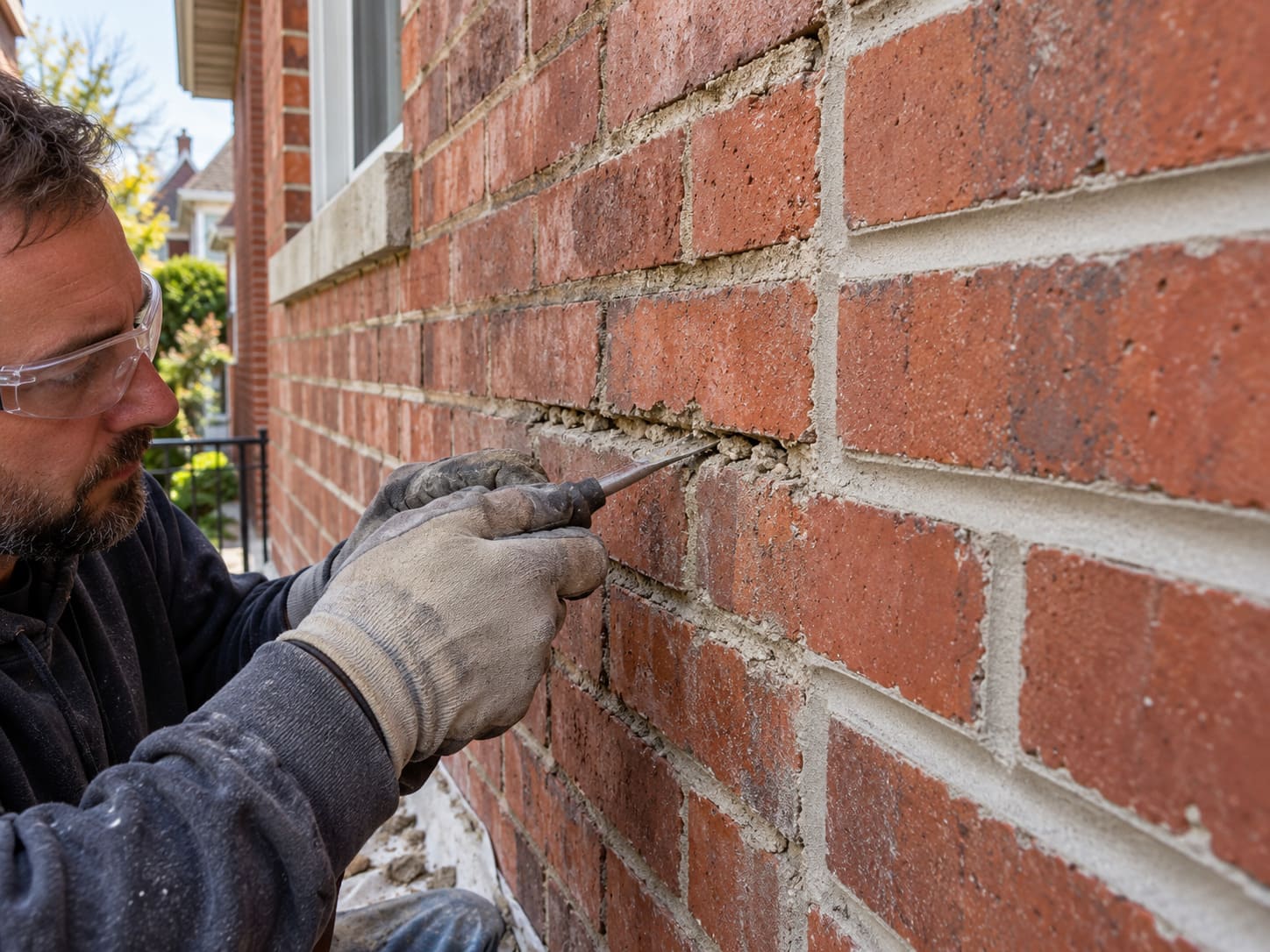
Brick repointing is the process of removing deteriorated mortar from the joints between bricks and replacing it with fresh mortar. Done properly, it restores the wall’s weather resistance, strength, and appearance without replacing the brick itself.
The terms repointing and tuckpointing are often used interchangeably in the GTA, though tuckpointing traditionally refers to a finer technique that adds a contrasting thin line for a crisp finished look. In practice, homeowners searching for either are usually after the same thing: new mortar in worn joints to protect the wall.
Mortar is deliberately the weaker material in a brick wall. It is meant to wear before the brick does, so that repointing the joints is a routine renewal rather than a major rebuild. Repointing at the right time protects the far more valuable brick behind it.
Why Mortar Deteriorates
Understanding what wears mortar down explains why it happens in Ontario homes and why it is unavoidable over time.
Freeze and Thaw Cycles
Water enters small cracks in the mortar, freezes, and expands, which widens the crack a little more each winter. Over decades this steady cycle breaks the mortar down from the surface inward. It is the leading reason mortar fails in the GTA.
Age and Weathering
Rain, wind, and sun gradually erode mortar joints even without dramatic damage. Older homes built with softer lime-based mortar tend to show wear sooner, and the original mortar in many pre-war properties has simply reached the end of its natural life.
Moisture and Drainage Problems
Leaking gutters, downspouts that discharge against the wall, and poor drainage keep sections of brick persistently wet, which speeds mortar breakdown in those areas. If damage is concentrated in one spot, a water source is often the underlying cause.
Previous Poor Repairs
Mortar that is too hard or poorly matched can actually damage brick over time, because it forces the brick to absorb the stress that the mortar should take. Past repairs done with the wrong mix are a frequent source of trouble that shows up years later.
Signs Your Brick Mortar Needs Replacing
Mortar rarely fails suddenly. The signs build gradually, and catching them early keeps the repair small.
- Mortar that is crumbling, sandy, or falling out when touched.
- Joints that are recessed more than about 6 millimetres, roughly a quarter inch, from the face of the brick.
- Visible gaps or cracks running along the joints.
- Bricks that are loose or can be moved by hand.
- Water getting into the wall, shown by dampness, staining, or interior moisture near exterior brick.
- Spalling or flaking brick faces in areas where mortar has failed.
A simple check is to press a screwdriver or key into the joint. If the mortar scrapes away easily or the tool sinks in, the mortar has lost its strength and the wall is due for repointing.
How Brick Repointing Is Done
Quality repointing is slow, careful work. The difference between a repair that lasts decades and one that fails in a few years comes down to the process.
Assessment and Mortar Matching
The wall is inspected to determine how much repointing is needed and what kind of mortar suits the brick. Matching the mortar’s strength and composition to the original is essential, since mortar that is harder than the brick can cause the brick to crack and spall over time. Colour and texture are matched too, so the finished wall looks consistent.
Removing the Old Mortar
Failed mortar is cut out of the joints to a proper depth, generally about twice the width of the joint, using tools chosen to avoid damaging the brick edges. Shallow raking leaves the new mortar without enough depth to bond, so this step is where careless work shows up first.
Cleaning and Dampening
Dust and debris are cleaned from the joints, and the brick is lightly dampened so it does not pull moisture out of the fresh mortar too quickly. Skipping this weakens the bond and leads to premature cracking.
Filling and Tooling the Joints
New mortar is packed into the joints in layers and then tooled to the desired profile once it begins to set. Tooling compresses the mortar and sheds water properly, which is what gives the joint both its finished appearance and its weather resistance.
Curing and Cleanup
The fresh mortar is protected as it cures, and excess is cleaned from the brick face. Proper curing, free from too much heat, frost, or rapid drying, is what lets the repair reach full strength. This is why repointing is scheduled for suitable weather rather than the coldest months.
Repointing and Related Brick Repairs
Repointing is often part of a wider conversation about the condition of a wall. Knowing where it fits helps you decide the right scope of work.
Repointing Versus Tuckpointing
For a closer look at the finishing technique and when it is the preferred choice, see our overview of tuckpointing. Many walls are best served by straightforward repointing, while visible feature walls sometimes benefit from the finer technique.
When Bricks Themselves Are Damaged
If the bricks are spalling, cracked, or crumbling as well as the mortar, repointing alone will not be enough. Damaged units need replacing, and understanding why they are failing matters. Our guide to spalling brick repair explains how to tell mortar problems from brick problems.
What Affects the Cost of Brick Repointing
Repointing is labour-intensive, so cost follows the amount and difficulty of the work more than the materials. Knowing the drivers helps you plan and compare quotes.
- Area to be repointed. A full wall costs more than a few localised patches.
- Condition of the joints. Deeply deteriorated mortar takes more time to remove and replace.
- Height and access. Upper storeys and difficult access require scaffolding and add time.
- Mortar type and colour matching. Heritage or custom-matched mortar takes more preparation than a standard mix.
- Additional brick repair. Replacing damaged bricks or addressing spalling adds to the scope.
- Joint style. Finer techniques such as tuckpointing take longer than standard repointing.
Because these factors vary so much from house to house, an on-site look is the only way to get an accurate figure. For a broader view of pricing, our breakdown of brick repair cost in Toronto shows how repointing fits alongside other brick work.
Common Brick Repointing Mistakes
Most repointing failures come from the same few errors, and nearly all can be avoided with proper workmanship.
- Using mortar that is too hard. Modern high-strength mortar on older, softer brick can crack and spall the brick. The mortar should always be weaker than the brick.
- Not raking joints deep enough. Shallow preparation gives the new mortar too little to bond to, so it fails early.
- Covering over old mortar. Smearing new mortar over deteriorated joints without removing the old does not last.
- Mismatched colour and texture. Poor matching leaves a patchwork appearance that is hard to correct.
- Repointing in poor weather. Freezing or very hot conditions weaken the cure and shorten the life of the work.
- Ignoring the water source. Repointing a wall that keeps getting soaked by a leaking gutter means the problem returns.
A careful, experienced approach avoids these pitfalls and gives you mortar that protects the wall for decades.
Frequently Asked Questions About Brick Repointing
How often does brick need to be repointed?
Mortar typically needs repointing every 25 to 50 years, though the exact interval depends on the original mortar, exposure, and conditions. Walls facing prevailing weather, or those with poor drainage, may need attention sooner, while sheltered walls can last longer. Rather than following a fixed schedule, it is better to inspect your brickwork periodically and act when joints begin to crumble or recede. Catching deterioration early keeps the job limited and protects the bricks from moisture damage.
Is repointing the same as tuckpointing?
The two terms overlap, but they are not identical. Repointing is the general process of replacing worn mortar in the joints, while tuckpointing is a finer technique that uses two mortar colours to create a thin raised line for a crisp, precise appearance. In everyday conversation in the GTA, homeowners often use the words interchangeably. For most walls, standard repointing delivers the protection and appearance needed, and tuckpointing is chosen where a particular finished look matters.
Can I repoint brick myself?
Small, simple repairs are possible for a capable DIYer, but repointing is easy to get wrong and the mistakes are costly. Using the wrong mortar strength, raking too shallow, or damaging the brick edges can harm the wall rather than protect it. Large areas, upper storeys, and older homes with soft brick are best left to experienced masons. A poorly done repair often costs more to correct than doing it professionally the first time, so it is worth being cautious.
How long does brick repointing take?
The timeline depends on the area involved and the condition of the joints. A small section can be completed in a day or two, while a full house can take a week or more, particularly when scaffolding is needed. Removing the old mortar to the correct depth is the slowest part and cannot be rushed without compromising the result. Weather also matters, since repointing is best done in mild conditions, so the schedule may shift with the season.
What happens if I do not repoint my brick?
Leaving failed mortar alone lets water get into the wall, which accelerates damage over time. Moisture can freeze inside the joints and brick, causing spalling and cracking, and can eventually lead to loose bricks or interior dampness. What begins as a modest repointing job can grow into brick replacement or even partial rebuilding. Because mortar is meant to be the sacrificial layer, repointing it on time is a small price compared with repairing the brick it was protecting.
When is the best time of year to repoint brick in Toronto?
Spring through early fall is the best window, because mortar needs mild, stable temperatures to cure properly. Freezing conditions can ruin fresh mortar before it sets, and extreme heat can cause it to dry too quickly and crack. Late spring and early fall are often ideal, with moderate temperatures and lower risk of weather swings. Booking early in the season is wise, since masonry contractors fill their schedules quickly once the weather turns warm.