Foundation waterproofing is the most reliable way to keep water out of a basement, but it is often misunderstood as a single product rather than a system. Done from the outside, it stops water before it ever reaches the wall, which is why it tends to outlast interior fixes.
This guide explains how exterior foundation waterproofing works, the signs that tell you a home needs it, and what separates a lasting job from a temporary patch. If you have damp basement walls, a musty smell, or water after every storm, this is the context you need before deciding what to do.
What Exterior Foundation Waterproofing Is
Exterior foundation waterproofing is a system applied to the outside of a foundation wall to prevent water from entering. Rather than managing water after it has already reached the basement, it forms a barrier at the point where water first meets the structure.
The distinction matters. Interior methods, such as sealants and drainage systems, deal with water that has already crossed the wall. Exterior waterproofing keeps that water from getting there in the first place. For homes with persistent moisture, addressing the problem at its source is what produces a dry basement that stays dry.
A complete exterior system usually combines several elements working together: a waterproof membrane, a drainage layer, and a functioning weeping tile at the footing. No single one of these does the whole job on its own.
How Exterior Foundation Waterproofing Works
A proper exterior job is a sequence of steps, each of which depends on the one before it being done well. Skipping or rushing any stage is where most failures begin.
Excavation
The soil is dug away from the foundation down to the footing, exposing the full height of the wall. This is the most labour-intensive part of the job and the reason exterior work costs more than interior alternatives. Careful excavation also protects nearby landscaping, walkways, and utilities.
Cleaning and Crack Repair
Once the wall is exposed, it is cleaned and inspected. Any cracks or damaged areas are repaired before the membrane goes on, because a waterproof layer applied over an unaddressed crack will not hold. This stage often overlaps with structural foundation repair when the excavation reveals problems that were hidden underground.
Membrane Application
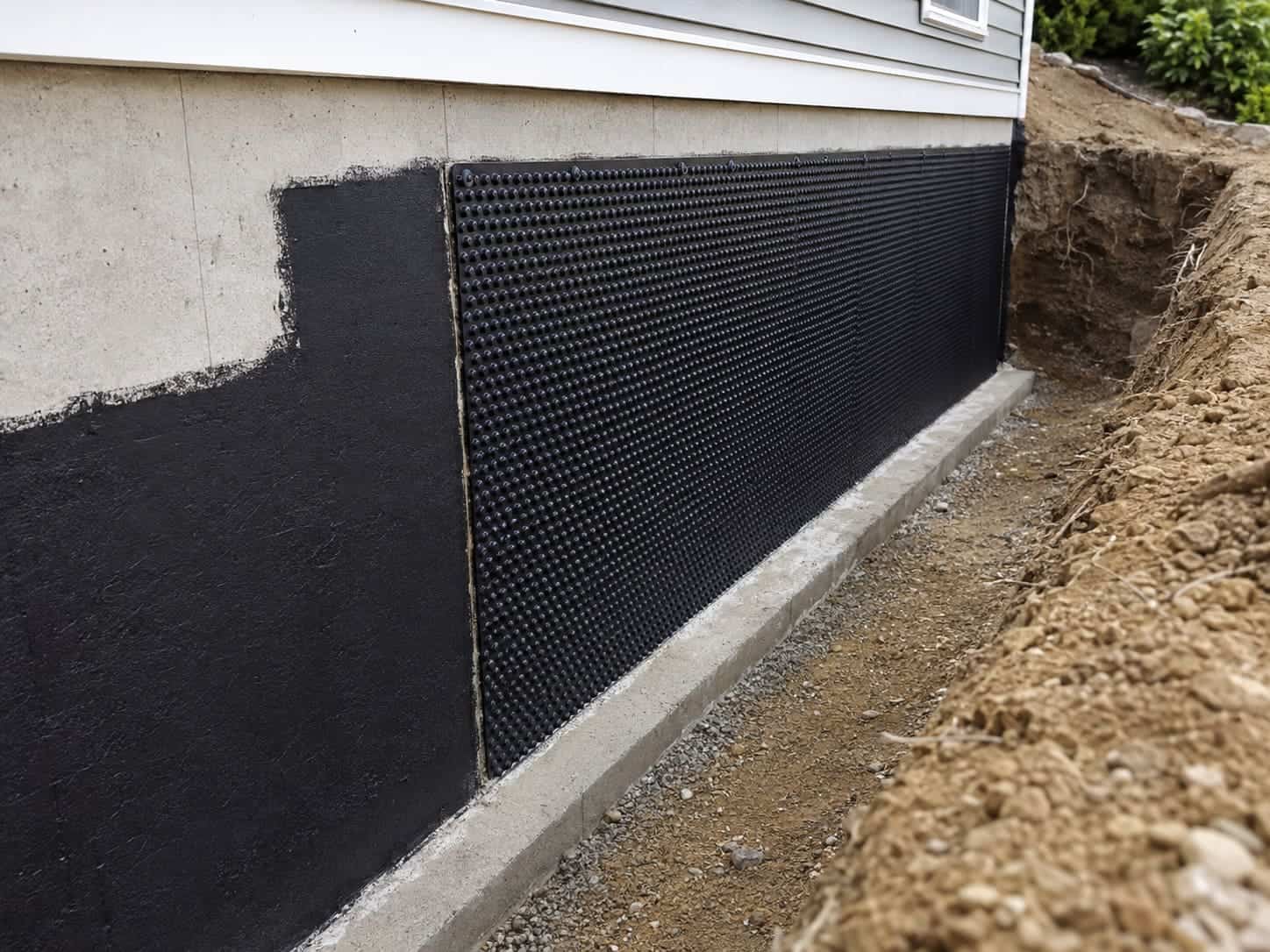
A waterproof membrane is applied across the exposed wall. This may be a liquid-applied rubberised coating, a peel-and-stick sheet membrane, or a combination, chosen to suit the foundation material and conditions. The membrane is the primary barrier and needs full, continuous coverage with no gaps.
Drainage Layer and Weeping Tile
A dimpled drainage board is often installed over the membrane to create a channel that directs water down and away from the wall. At the base, the weeping tile at the footing carries that water off to a drain or sump. The membrane stops water at the wall, and the drainage system gives the water somewhere to go.
Backfill
Finally the trench is backfilled, ideally with material that drains well, and the grade is restored so the ground slopes away from the house. Correct grading is part of the waterproofing, not an afterthought, because it keeps surface water from pooling against the wall.
Signs Your Home Needs Foundation Waterproofing
Water problems usually announce themselves gradually. Catching the signs early means a smaller, less disruptive project.
- Damp or wet basement walls, especially after rain or snowmelt.
- A persistent musty or earthy smell in the basement.
- White chalky mineral staining on the walls, known as efflorescence.
- Peeling paint, bubbling drywall, or water marks near the base of the walls.
- Pooling water on the basement floor or around the perimeter.
- Visible cracks that leak during wet weather.
- Mould growth or a rise in basement humidity.
One of these on its own may be minor. Several together point to water actively getting through the foundation, and the sooner that is addressed, the less damage accumulates inside.
Exterior Versus Interior Waterproofing
Homeowners are often offered an interior solution first because it is cheaper and faster. It has its place, but it is important to understand what each approach actually does.
What Interior Waterproofing Does
Interior systems, such as an interior drainage channel and sump pump, collect water that has already entered and pump it out. They manage water rather than stop it. This can be the right choice in certain situations, but the wall itself still gets wet, and the underlying cause remains.
Why Exterior Is More Durable
Exterior waterproofing keeps the wall dry by stopping water on the outside. Because it addresses the source rather than the symptom, it is the more permanent solution and protects the foundation material itself from ongoing moisture exposure. Professional exterior waterproofing also gives you a system that is warrantied and built to last, rather than a stopgap. The trade-off is that it costs more and involves excavation.
People sometimes confuse waterproofing with parging, which is a surface coat and not a waterproofing system. If you are weighing the two, our explainer on parging vs. foundation waterproofing lays out where each one fits.
What Affects the Cost of Exterior Foundation Waterproofing
Because exterior waterproofing is a larger project, the price reflects the scope of work rather than a flat product cost. The main variables are worth knowing before you get a quote.
- Length and depth of the wall. Deeper foundations and longer runs mean more excavation, more membrane, and more labour.
- Access. Tight side yards, decks, walkways, driveways, and mature landscaping over the work area all add time and care.
- Condition of the wall. Cracks or damage found during excavation may need repair before the membrane is applied.
- Drainage requirements. Whether the weeping tile needs replacing and where water can be directed both affect the plan.
- Whole perimeter versus a single wall. Treating one problem wall is far less than doing the full foundation.
Because the scope varies so widely, an accurate figure needs an on-site look. A contractor should be able to explain not just the number but which parts of the system your home actually requires.
Common Misconceptions About Foundation Waterproofing
A few widespread misunderstandings lead homeowners to spend money without solving the problem.
- “A coat of sealant on the inside will fix it.” Interior sealers can slow surface dampness but do not stop water pressure from the outside, and they often fail as that pressure continues.
- “Parging waterproofs the wall.” Parging is a cement finish coat for appearance and minor protection. It is not a waterproofing membrane and should not be relied on as one.
- “If the basement is dry now, I do not need it.” Waterproofing is easiest and cheapest to address before major damage appears. Waiting until water is pooling usually means a bigger cleanup alongside the repair.
- “Any membrane will do.” The membrane has to suit the foundation material and be applied continuously. Coverage and preparation matter as much as the product itself.
Understanding these upfront helps you compare quotes on substance rather than price alone, and to recognise when a proposed fix is treating the symptom instead of the cause.
Frequently Asked Questions About Foundation Waterproofing
How long does exterior foundation waterproofing last?
A properly installed exterior waterproofing system can last for decades, and quality membranes are often rated for the life of the foundation. Longevity depends on the membrane being applied continuously over a clean, repaired wall, and on the drainage system carrying water away as intended. Where jobs fail early, it is usually because a crack was not repaired first, the membrane had gaps, or the grading directed water back toward the wall. Done correctly, exterior waterproofing is the most durable option available.
Is exterior waterproofing better than interior waterproofing?
For stopping water at its source, exterior waterproofing is generally the more durable solution. It keeps the foundation wall itself dry, while interior systems manage water that has already entered. That said, interior methods have their place, particularly where excavation is impractical or where budget is a constraint. The right choice depends on the home, the severity of the problem, and access around the foundation. A professional assessment weighs those factors rather than defaulting to one method.
Can foundation waterproofing be done on an existing home?
Yes, exterior waterproofing is routinely done on existing homes, not just new construction. The process involves excavating around the affected walls, repairing any damage, applying the membrane, and restoring the grade. It is more involved on an occupied home because of landscaping, walkways, and access, but it is very common. Many GTA homeowners waterproof an existing foundation specifically because a basement that was dry for years has started letting water in as drainage and soil conditions change.
Does foundation waterproofing require excavation?
True exterior waterproofing does require excavation, because the membrane has to be applied to the outside face of the wall. The soil is removed down to the footing so the full height of the foundation can be treated. Interior waterproofing does not require exterior digging, which is part of why it is cheaper, but it also does not stop water at the source in the same way. If a contractor offers exterior waterproofing without excavation, it is worth asking exactly what is being applied and where.
How do I know if my basement leak needs waterproofing or just a crack repair?
It depends on whether the water is entering through one defined crack or through the wall more generally. A single leaking crack can often be resolved with a targeted repair or injection. Widespread dampness, multiple wet areas, or water that returns across a whole wall usually points to a drainage and pressure problem that waterproofing addresses. An on-site assessment is the reliable way to tell the difference, because the fix should match the cause rather than the most visible symptom.
Will waterproofing stop basement humidity and musty smells?
Addressing the source of water intrusion is the most effective way to reduce the humidity and musty odours that come with a damp basement. Those smells are usually caused by moisture moving through the foundation and by any mould or mildew that moisture supports. Once the wall is kept dry, the conditions that create the smell are removed. In some cases a dehumidifier or improved ventilation helps alongside waterproofing, but treating the water intrusion itself is the step that produces a lasting change.